






Lanmaoa asiatica is a bolete: a mushroom with a sponge-like layer of pores under the cap instead of gills. It belongs to the family Boletaceae and was formally described in 2015 from material collected in Yunnan, China.
How to recognise it
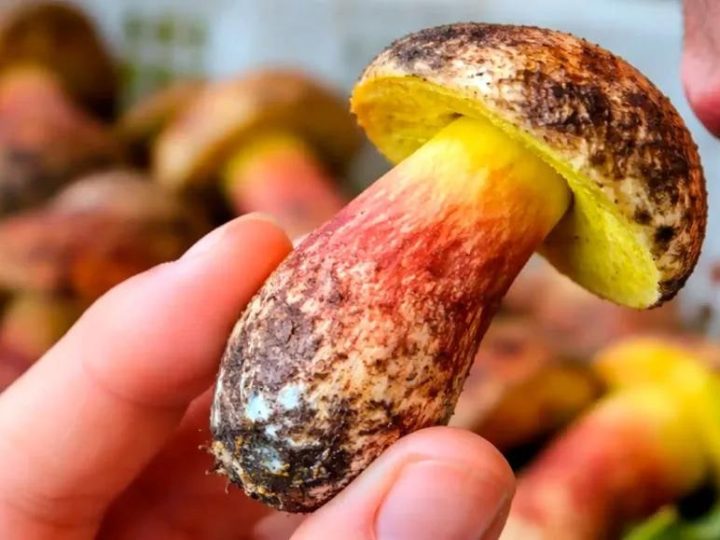
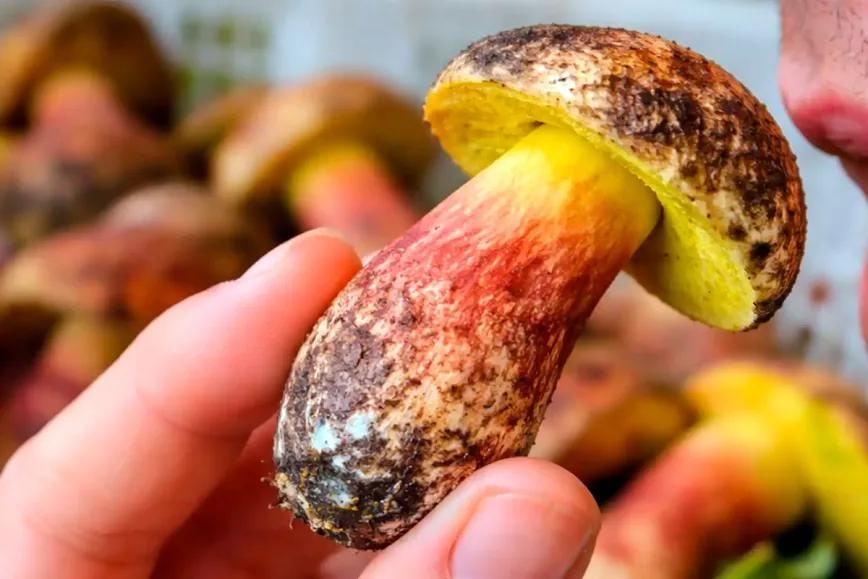
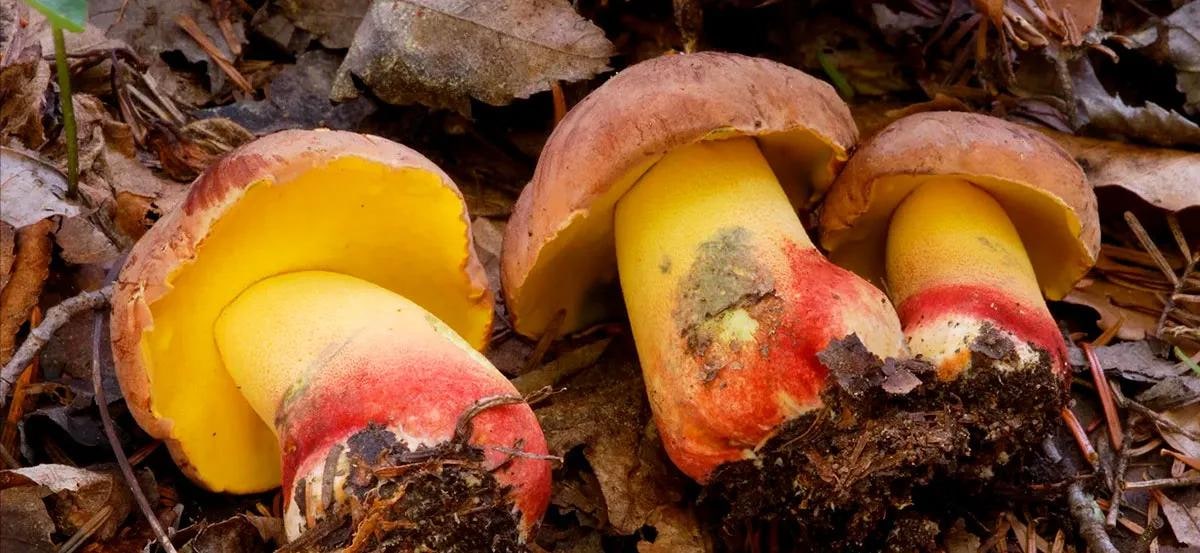
The cap is reddish to pinkish brown. Underneath, the pore surface is yellow. The stem is yellow toward the top and flushed red toward the base. Cut or bruised flesh turns blue within moments, which is common among related boletes and is not enough on its own to identify the species.
Where it grows
It forms ectomycorrhizal partnerships with pines — the fungus and the tree roots exchange nutrients — and is associated in particular with Pinus yunnanensis. It is recorded in Yunnan and in the Cordillera highlands of northern Luzon in the Philippines.
Why people know about it
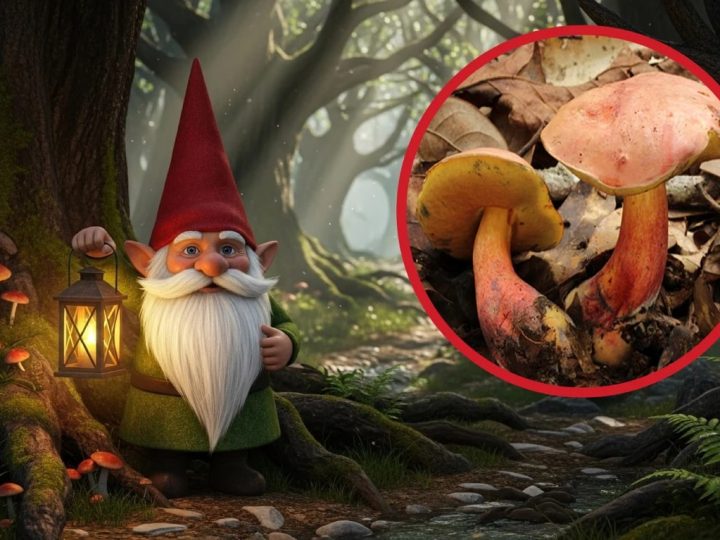
In Yunnan it is sold in wild-mushroom markets during the rainy season and cooked at home and in restaurants. It is also linked to poisoning cases in the province, typically when it has not been cooked thoroughly. Some people who eat it undercooked report seeing small figures, an effect science has not yet explained.
Content on this site is provided for education and research context. It is not medical, legal or food-safety advice, and nothing here encourages consuming wild mushrooms or seeking psychoactive effects.